The Coach Who Never Stopped Rebuilding
The portfolio that made you made money five years ago is a historical artifact. The portfolio that keeps you wealthy is the one you have the courage to keep rebuilding.
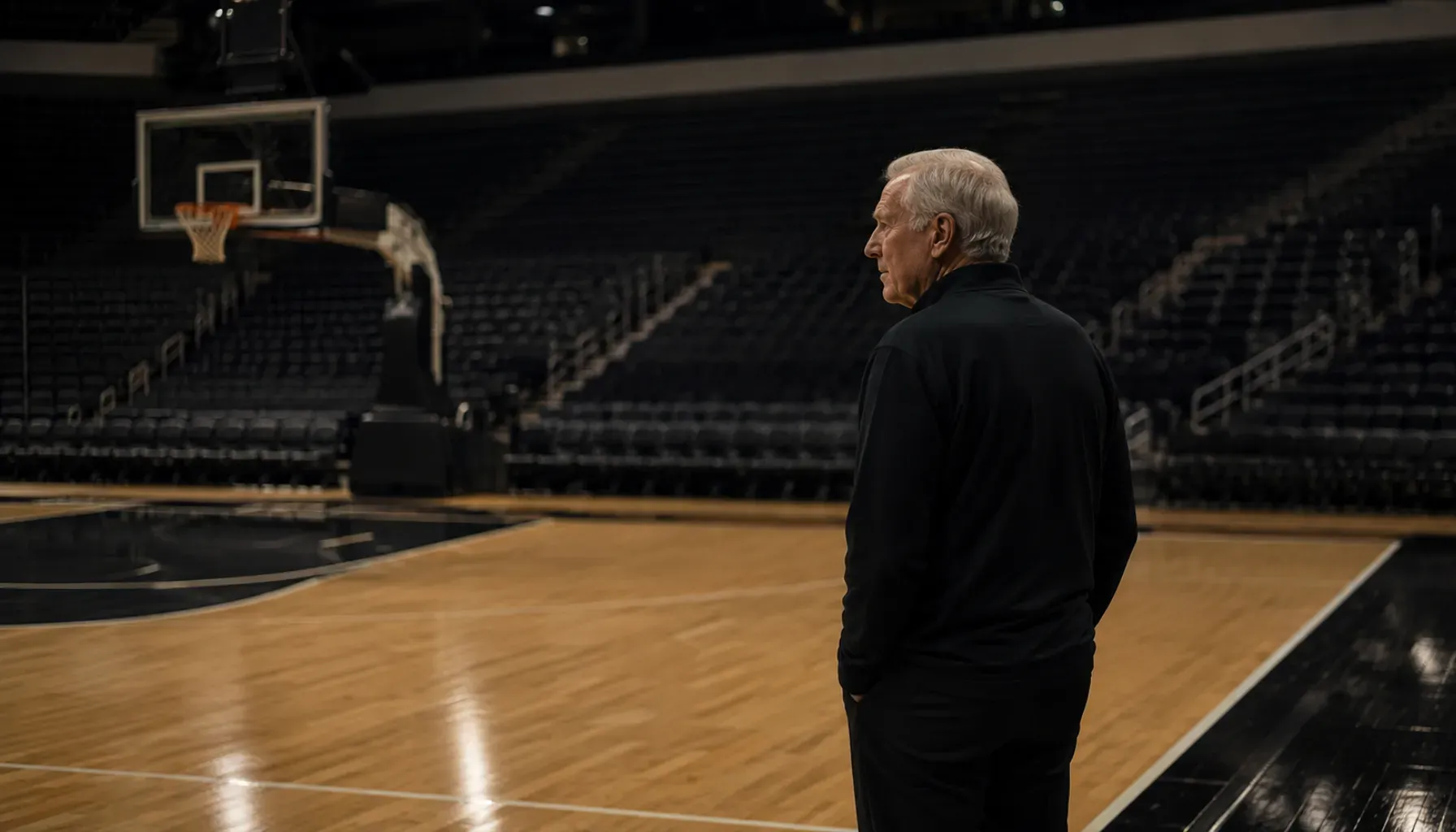
You can also listen to this article as a podcast on Spotify, Apple, and YouTube.
My eight-year-old son is getting into basketball. We went to three Philadelphia 76ers games this year and now he’s hooked. We recently watched the Oklahoma City Thunder play the San Antonio Spurs. Hall of famer Tim Duncan was on the sidelines for the game. My son didn’t know who he was, so I told him about him. As I researched the Spurs, Duncan, Popovich and those five NBA championships I found myself reflecting on what they can teach us about investing.
In 1999, the San Antonio Spurs won their first NBA championship. Tim Duncan and David Robinson were dominant in the frontcourt. They also had a defense that suffocated opponents into the low 80s per game and a starting point guard named Avery Johnson.
Just fifteen years later, they won their fifth championship. The point guard was Tony Parker. The shooting guard was Manu Ginóbili. The Finals MVP was a 22-year-old named Kawhi Leonard. Tim Duncan was still there, but he was no longer the centerpiece. He was the wise old anchor on a team built around motion, ball movement, and a roster speckled with international role players no one knew three years earlier.
The one constant was the man in the chair at the end of the bench.
Gregg Popovich coached the Spurs for 29 seasons. He won titles in 1999, 2003, 2005, 2007, and 2014. If you squint at those years, you'll notice something strange. The 1999 team and the 2014 team have essentially nothing in common except a logo, a city, and a coach. Different stars. Different style of play. Arguably different eras. Everything was different.
That is also what good portfolio management looks like.
Investors love to talk about conviction. Hold your winners. Buy and never sell. These are nice slogans, and they're occasionally true. But this obscures a harder truth that anyone who's run money for a long time will tell you in private. The portfolio that made you money five years ago is probably not the portfolio that will make you money today.
Industries shift. Moats erode. Leaders reach their ceilings. Competitors evolve faster and faster because of AI. In addition, microcaps are inherently fragile with shorter shelf lives. At the start of every year or season, you always think this is the portfolio or team you can win with for years. But reality is half of the team will be gone and traded in 12-months. As a microcap investor you are constantly rebuilding.
The coach who wins a championship and then refuses to change his roster wins exactly one championship. The coach who wins five does something much harder. He keeps the philosophy and rotates the players. Even if you have a superstar player/stock, the roster around him/her changes.
Popovich's philosophy was simple. Defense first. Pass up a good shot for a great one. No stars above the system. Bring in players with character, develop them quietly, and don't overpay for the obvious. His willingness to change personnel was the whole point.
In 1999, the Spurs won with size and grinding half-court defense because that's what the league rewarded and that's what their roster could execute. By 2014, the league had gotten faster. It was more spread out and three-point oriented. Popovich's offense transformed into the most beautiful passing display the sport had ever seen. Same coach. Same culture. Completely different team to play in a different game in a different era.
The investing equivalent is simple to state and brutal to execute. You hold the framework. You hold your principles. But you are aware of the trends (style of play), evolve, and play your best players. You don’t complain about the sectors outperforming (AI, data centers, etc). You are openminded enough to evolve and add a player or two that allows you to get the win in this era too. You don’t sit there on your laurels criticizing other coaches and teams that are winning.
Scouting is analogous to microcap investing. Popovich's front office had a near-supernatural ability to find players nobody else valued. Tony Parker was the 28th pick in the 2001 draft. Manu Ginóbili was taken 57th out of 58 picks in 1999. This is the basketball equivalent of finding a microcap nobody has heard of trading at three times earnings. Kawhi Leonard was acquired in a draft-night trade because the team that drafted him didn't want him. None of these guys were obvious. None of them were on the cover of magazines as teenagers. The Spurs found them because they were looking in places other teams weren't looking and because they valued character as high as ability.
The best stock pickers do the same thing. They're not paying up for known names. They're looking at the back of the draft. They're reading the 10-K nobody reads. They're flying to a town nobody flies to and meeting a management team nobody covers. At Planet MicroCap Las Vegas they are the ones looking at the companies at the bottom of the most requested list. Many of the picks won't work. That's fine. The ones that do, you size up over time, the way Popovich let Parker grow from a curiosity into a Finals MVP.
Position sizing is like playing time, and it’s where most investors actually lose the game. Popovich reduced Duncan's minutes year over year, gradually moving him from 38 a night to 25, not because Duncan was washed but because the math of an aging body required it. He didn't fall in love. He didn't owe anyone anything. The player who deserved 30 minutes got 30 minutes, regardless of what he was making or what he'd done two years prior.
Investors often do the opposite of what they should. They fall in love with the position that paid for the kitchen renovation. They hold the winner long past the point where the forward IRR’s make sense. They give starting-lineup weight to a stock whose thesis quietly broke 18 months ago because admitting that means admitting they got something wrong. A good portfolio manager, like a good coach, treats every position as if it must earn its minutes tonight. Every month, every quarter, every season you reassess by being brutally honest and asking - Are these my best players or should we make a trade?
The hardest part is what Popovich made look easiest. The 1999 Spurs are not coming back. The 2014 Spurs aren't either. The team that wins next year will look different from both, and the coach who refuses to acknowledge this will spend the rest of his career talking about their past successes because they didn’t evolve to have future ones.
The portfolio that made you made money five years ago is a historical artifact. The portfolio that keeps you wealthy is the one you have the courage to keep rebuilding.
You are the coach of your portfolio. You are the only constant.
Find super stars. Always play your best players. Win championships. That is successful stock picking.




![[LAST CALL] Join 525+ Investors and 135+ Companies in Las Vegas](https://microcapclub.com/content/images/2026/05/MCC-FeaturedPM-2026-Vegas.jpg)
